Charlotte Perkins Gilman received a significant amount of attention for writing “The Yellow Wallpaper,” with many readers of the time writing to her with questions. A Boston physician protested the piece in The Transcript, declaring that a story like that should not have been written because “it was enough to drive anyone mad to read it” (Gilman). The letter read:
"It is a sad story of a young wife passing through the gradations from slight mental derangement to raving lunacy. It is graphically told, in a somewhat sensational style, which makes it difficult to lay it aside, after the first glance, till it is finished, holding the reader in morbid fascination to the end. It certainly seems open to serious question if such literature should be permitted in print" (Foster).
A year earlier, the editor of the Atlantic Monthly refused to run the story in his own publication. His rejection letter to Gilman simply read, “Dear Madam, Mr. Howells has handed me this story. I could not forgive myself if I made others as miserable as I have made myself!” (Foster). Another physician from Kansas wrote Gilman saying that her short story was the best description of incipient insanity that he had ever seen, “and—begging my pardon—had [she] been there?” (Gilman).
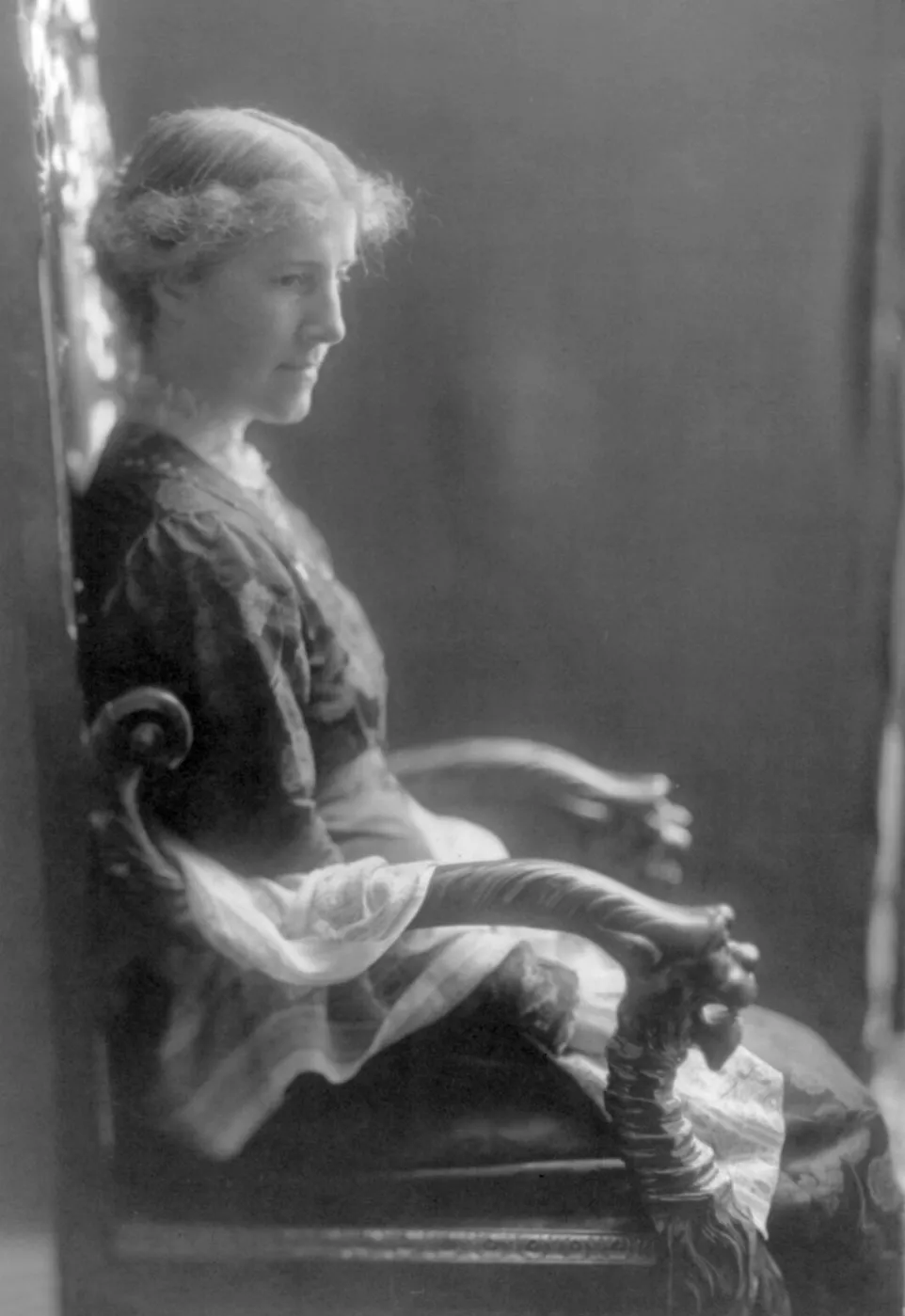
Gilman reflected in “Why I Wrote The Yellow Wallpaper” (1913) that she had suffered for many years from “a severe and continuous nervous breakdown tending to melancholia.” Today, her depressive episode would likely be categorized as postpartum depression, brought on after the birth of her daughter, Katherine. Along with raising her daughter, Gilman was also responsible for caring for her terminally ill mother, as well as a boarding house she was running, where she nursed several ailing residents. On top of these responsibilities that would be too much for any one person, Gilman noted that she never received “a cent” for her most famous short story, even when it was published in the New England Magazine, adding a financial burden to her already heavy shoulders. Gilman shared that “[she] did all the housework and nursed mother till [she] broke down. Then [she] hired a cook and did the nursing till [she] broke down; then [she] hired a nurse and did the cooking till [she] broke down” (Foster).
These “breakdowns” that Gilman referenced were frequent periods where she found herself unable to function for up to weeks at a time. Gilman claimed that she lost a total of twenty-seven years of working time due to these depressive episodes (Foster). When Gilman finally went to see a specialist in nervous diseases—Silas Weir Mitchell, who was known to be the best in the country—he dismissed her symptoms and claimed it “only proved self-conceit” and prescribed her the rest cure (Cutter). Mitchell claimed that there was nothing wrong with Gilman and that she should be sent home to “live as domestic a life as far as possible,” to “have but two hours’ intellectual life a day,” and “never to touch pen, brush, or pencil again” as long as she lived (Gilman).
Gilman went home and obeyed his directions for about three months before she “came so near the borderline of utter mental ruin that [she] could see over” (Gilman). She explains in her autobiography that “the mental agony grew so unbearable that [she] would sit blankly moving [her] head from side to side—to get out from under the pain” (Cutter). Gilman eventually returned to working again, casting aside the advice of Silas Weir Mitchell, and she began to recover. This experience drew her to write “The Yellow Wallpaper,” and she even mailed a copy to the physician that “so nearly drove [her] mad” (Gilman).
To state it simply, Gilman writes that the reason she wrote “The Yellow Wallpaper” was “not… to drive people crazy, but to save people from being driven crazy.” The physician whom she mailed a copy of the short story to, despite his lack of acknowledgement of Gilman’s direct criticism of his practice, had admitted to friends that after reading “The Yellow Wallpaper,” he altered his treatment.